Showing posts with label working. Show all posts

Monday, 9 June 2014

I applaud companies offering yoga at work

This last couple of weeks I've been covering for a yoga teacher friend of mine Lucy Bannister while she's been away teaching a retreat. She's let me loose on some of her corporate yoga classes – classes that are offered in the work place for company employees – and it's been great fun!

One of the things I've noticed is the unusual demographic of the people at the classes. A proportion of them are perhaps a bit older, are unfit, or have certain injuries. I'm sure this is a testament to Lucy's lovely, accepting, gentle manner, and the rather therapeutic style of the yoga she teaches. But I'm also sure that by offering yoga cheaply or for free at a convenient time and place, allows people who wouldn't otherwise go to a gym or studio class, to come and do yoga. For this alone, I applaud any company that offers yoga to their employees at work!

And from talking to the people coming to the classes, one of the main reasons they come is to relax and de-stress.

Having a city job means stress. Doesn't it? "If you're not stressed then you're not working hard enough...!" It's almost rite of passage in the city to feel stressed. "Can I speak to John in derivatives please? I'm afraid he's been off for the last month with stress."

And how often do you hear the term "burn out" these days? Burn out, also known as chronic fatigue, is what happens to your system when you've been in a state of hyperarousal and it just can't take it any more.

Our bodies are hard-wired to respond to a situation of danger or vulnerability in a very particular way. Let's say we meet a bear in the forest, or perhaps more likely these days get asked at the last minute to do a board presentation. In both situations our body responds In the same way: it redirects energy and resources from our non-essential systems like digestion and our immune system to things like our muscles and heart (flight or flight). Adrenaline and cortisol are released that raise the heart rate, raise body temperature, and narrow your mental focus.

Getting that stress reaction once is a while is fine - in fact good! It can be exciting, adding a sense of thrill to giving that presentation! But the problems come when you live in a constant state of low-level stress, with those occasional big stresses thrown on top. There's always a deadline looming, your work phone keeps buzzing with emails from the LA office one moment and Hong Kong the next, someone in your team not performing, your partner keeps reminding you that you need to get the car fixed... Like this your body never gets a chance to return to normal, to come off orange alert. You're in a state of "hyperarousal".

Often the first things you might notice is that your digestion isn't working so well (the energy is constantly being diverted to more 'important' areas), you struggle sleeping (the mind is on alert mode), you keep getting colds or infections (your immune system is low), and maybe you have a low sex-drive (reproduction is another system that's compromised in the stress response). You may get sweaty palms, cold feet, headaches.

So what do we do? Our ambition and desire says keep going, work harder - it'll pass. But underneath that you might hear a quiet voice saying you need to relax. And that's where yoga can really help.

Stress brings tension, so yoga helps by lengthening and flexing the limbs so that they can soften and relax. You learn how to focus your attention on the body and sensations so intently so there's no space left in your mind for all those to-do lists and job worries. You learn how to let the movements unfold from moment to moment, and with as you notice that everything is in a constant state of change, and what you thought was fixed actually isn't, you build up a softness and resilience to difficulty, pain, and stress. So how wonderful it is to have it on offer at work!

If you listen really carefully after your class, you might hear your body saying a quiet, heart-felt thank you!


Thursday, 10 October 2013

What's in a front door? [a poem]

Delivering flyers. Delivering potential. Delivering junk to be recycled!
Lots of front doors, front gardens, front steps.
21A is up and 21B is down.
Letter boxes: flappy, tight, snappy, shite... vertical?
Behind their shiny exteriors, stiff draft excluders - not just drafts they keep out.
Lift the old chipped ones though and the opening is clear,

the leaflet glides with a cheer.

What's behind the door?
A pile of other unwanted junk mail?
An interested householder?
A single mum with no time to sleep, let alone yoga?
A hungry dog?

A keen yoga bean?
Only builders?

Frustrating letter boxes.
Getting hot from all the stair climbing;
Come on you, stop whining!
This is part of my job now;
I'm a yoga teacher, web designer, leaflet dropper.
Leaning down to open the flap, like a bow.
Finding grace. Finding flow. The true nature of the universe.

250 down, more hundreds to go.
They say one hour of advertising for every hour of class.
Potential... who knows.
But I will see you again, street of many houses.

Street of potential. Connections, meetings.
Street full of real life. Suffering, laughing, living.

Yoga offers ways to heal.
Are you ready? Come join me.


Wednesday, 2 October 2013

Bridging the space between formal practice and everyday life

What situations do you find hardest to stay mindful, to keep the ego from rearing up, to remain true to yourself, to stay in the flow?

I'd guess it would be a situation involving a group of people. Maybe your family, maybe work colleagues, housemates... The closer they are, the better they know how to press your buttons!

So maybe we can do yoga or sit in meditation and observe our tendencies to judge ourselves, perhaps as someone who's easily distracted, or someone who always wants to make things ok, or worries about what others think of us doing yoga or meditation. Maybe we can even start letting go these "I am" identifications: "I am a person with tight hips", "I always get angry when I can't do something", etc. But how does this help at a family dinner when your adversarial uncle starts drawing you into a conversation on the rights and wrongs of intervening in Syria? It's not much use to pull out your best warrior II pose on him... (might make him shut up for 5 mins though!)

It's not easy to bring what you learn on the mat or on the cushion into everyday life. But isn't that why we call it a practice? We're practising for everyday life. And what use is a practice where you can achieve beautiful flowing, non-dual, ego-less, oneness for 30 mins a day but still bite your colleagues head off in your morning meeting?

That's why it's helpful to build a bridge into our practice. A bridge between formal on-the-mat/cushion time and normal life. We create time to do a reasonably unchallenging activity 100% mindfully, bringing our practice to bear on something that isn't on the mat/cushion.

For this reason, in Zen we practice working meditation, or Samu in Japanese. It's emphasised to such a degree that it's actually one of the four principal components of Zen practice (along with sitting meditation, private meetings with your teacher, and talks).

Working meditation includes the practice of mindfulness, giving or generosity, duty, and selfless service. In Zen monasteries every monk (or retreat participant) has a duty to do work for the maintenance and upkeep of the building and grounds, or help with the cooking, shopping, accounts, etc. But it's more than a duty - the task is performed with the same mind as sitting meditation. Doing the activity 100%, becoming the activity. An opportunity to put what you've learned on the mat/cushion into practice.


Me doing samu on retreat in Japan (weeding the gravel)
For inexperienced practitioners (like myself), the working meditation activity should be super-simple: something like cleaning, gardening, or chopping wood/vegetables. The repetitive simplicity of these kind of activities needs very little thinking power, leaving plenty of energy to devote to being 100% mindful. A favourite
in Japan is weeding the gravel in the monastery garden (see photo).

Can you see the true nature of the universe in every weed you pick? In every stone or piece of earth you move? Can you disappear into the flow of the cleaning cloth sliding over the kitchen floor?

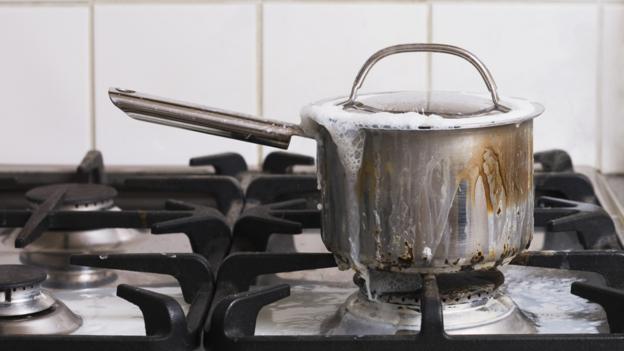
Gradually as our practice develops and we're able to stay with it more and more doing simple tasks, we can introduce some harder things. Cooking, for example, requires much more cognitive input, but can you stay 100% mindful when the saucepan is boiling over but the recipe says "gently simmer"?

I remember my teacher Daizan saying that the monastery accountant is always one of the most senior monks because it takes a very developed practice to stay 100% with it when you're doing the books!

So you can see that letting go of our frustrations, our right/wrong judgements, our need to win the argument, remaining empathetic, compassionate, loving, and not letting the ego direct our actions is hard enough when we're just hoovering the living room. Doing all that whilst your uncle is banging on about how important it is for our economy to maintain a military presence around the world, including Syria, is advanced practice!

Start small, and build up. If we're patient, diligent, and compassionate, one day we might find ourselves flowing through every situation with ease, being 100% our true nature without a speck of self.